
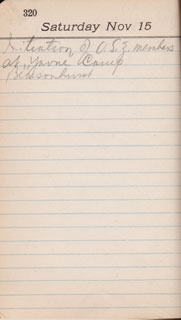
3 P.M.
Slow and no work today
and tomorrow, Received
picture of mother and Fule.
Sending home $5.00, I only
enter moneys sent home whenever
I remember about it.
—————–
Matt’s Notes
I’m not sure why work slowed down for Papa around this time, but maybe his factory had met its annual or holiday production quotas. It wasn’t unusual for him to have a few days or even weeks off during slack periods, but he never enjoyed these times, not only because he didn’t get paid but because idleness left him contemplative and blue. Perhaps he wrote “3 PM” at the top of this entry because he was he was so conscious of the day’s slow passage, or maybe he just noted the time because he normally didn’t pick up his diary until the end of the day.
I suppose, on such a day, a trip to the post office to wire money home seemed worth recording, though Papa wants to make it clear that, just because he noted it today for lack of other news doesn’t mean he didn’t frequently send money home without recording it. I wonder, in turn, if he also received photos from the old country fairly often but only bothered to write it down when nothing else was going on.
We don’t have the photo of his mother and youngest sister, Fule, mentioned in this entry, though we do have pictures of them both from other times. The photo of his mother, below left, is probably from the early 1910’s (it’s taken from a portrait of her with Papa’s father who, as we know, died in 1924) and the photo of Fule is from a group portrait of Papa’s relatives in the old country taken before Fule left for Palestine in the 1930’s. As we’ve discussed before, Fule was the, third, and final, of Papa’s siblings to get out of Snyatin before the Nazi occupation; his sisters Gitel, Ettel and brother Isaac were not so fortunate.

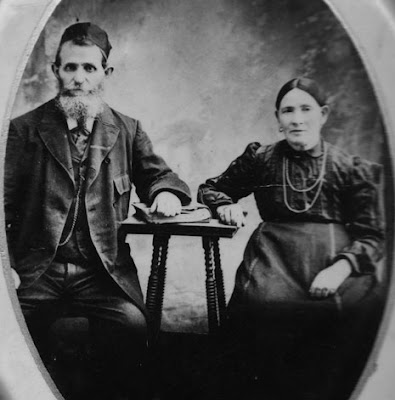
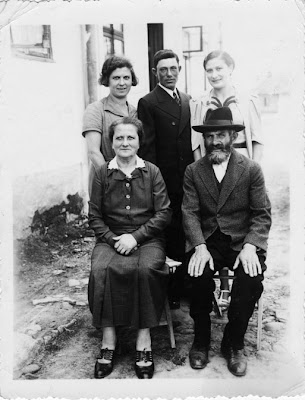

 Papa had seen plenty of influential Zionists speak at various functions and events throughout the year, but Kook was in the top tier. A legendary Torah scholar even before he went to Palestine, he was known for his unusual inclusiveness and openness, his belief in the importance of Zionism to Judaism (this “religious Zionism” or “religious nationalism” put him at odds with the Orthodox Rabbinical establishment of his day), and his support for the combination of secular and religious education.



 My uncanny powers of deductive reasoning tell me this synagogue was located on Pennsylvania Avenue, a north-south artery on the western side of East New York, not far from the “new law” tenements that had cropped up in the neighborhood since the passing of the Tenement House Act of 1901. These tenements boasted at least one bathroom for every two families and relatively plentiful windows, so Jewish immigrants, drawn by these amenities and encouraged by new subway construction, had been flocking to the area from Manhattan’s Lower East Side for most of the early 1900’s.

